
The Changing Face of Urban Maintenance: Are Access Platforms Keeping Up?
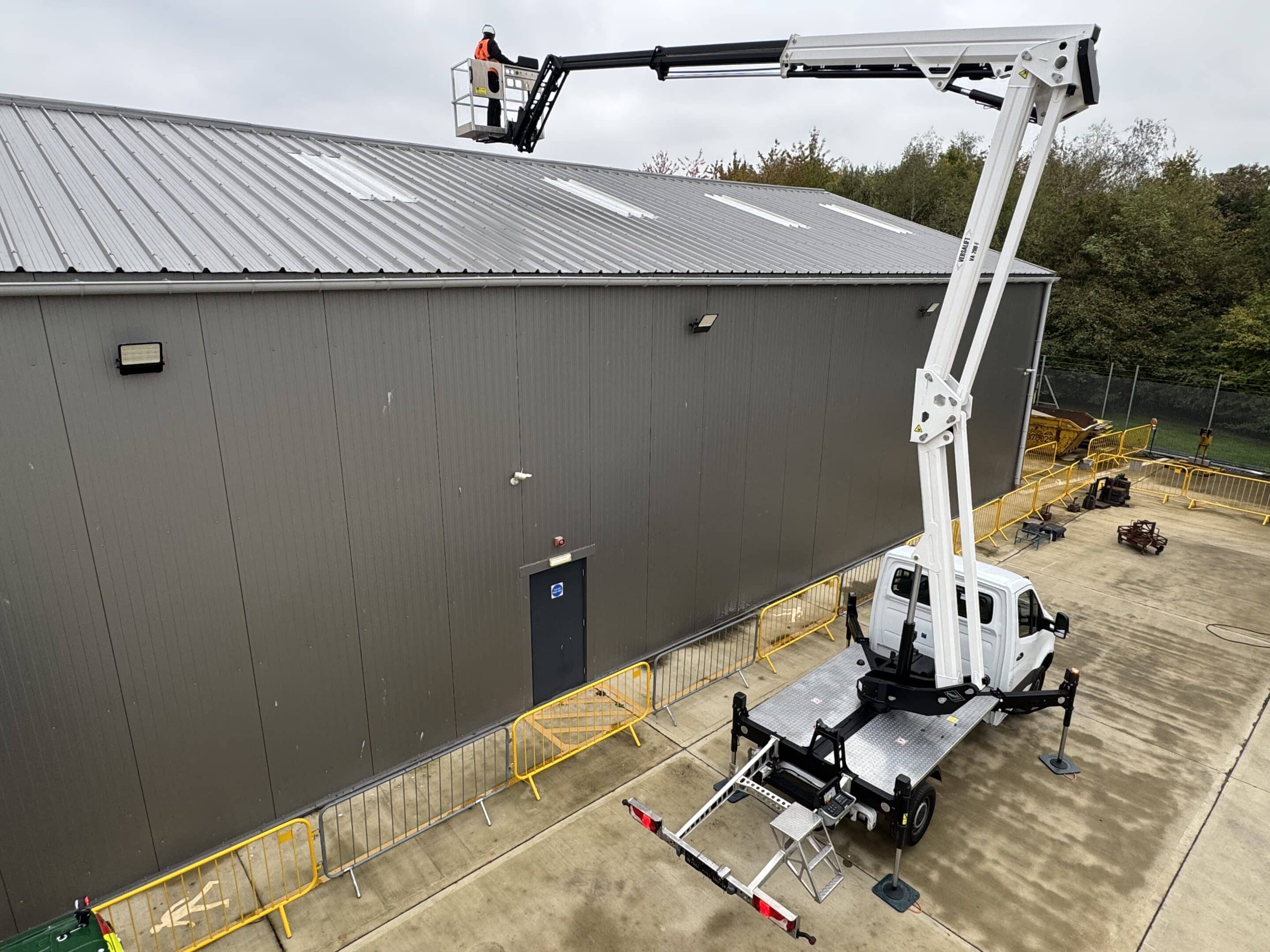
As our towns and cities become busier, maintaining the infrastructure that keeps them running is becoming increasingly challenging. But are the access platforms used to carry out this work evolving quickly enough?
From street lighting and telecommunications to CCTV systems and building maintenance, urban infrastructure requires regular inspection, repair and upgrades. Yet the environments in which this work takes place are becoming more complex.
Congested roads, limited parking, restricted working areas and the need to minimise disruption to the public are placing greater demands on maintenance teams.
For businesses and local authorities responsible for maintaining urban infrastructure, the challenge is no longer simply reaching the required working height. It’s about reaching it safely, efficiently and with as little disruption as possible.
So, is it time to rethink what we expect from a vehicle-mounted access platform?
Why Is Urban Infrastructure Maintenance Becoming More Challenging?
Urban maintenance teams face a unique set of challenges. Unlike construction sites, where working areas can often be planned around the equipment being used, maintenance work frequently takes place within existing, busy environments.
A telecommunications engineer may need to work around overhead obstructions. A contractor maintaining CCTV equipment might have only a limited window to complete the job before traffic increases.
These situations create several challenges:
- Restricted working space: Narrow streets, parked vehicles and surrounding buildings can limit where equipment can be positioned.
- Traffic and pedestrian disruption: Maintenance activities may require temporary traffic management, road closures or pedestrian diversions.
- Difficult access angles: Buildings, trees and other obstacles can prevent direct access to the working area.
- Time pressures: Teams may need to complete multiple maintenance jobs across different locations in a single day.
- Equipment limitations: Larger or less manoeuvrable vehicles may not be practical for every urban location.
The result? Choosing the right access platform is becoming just as important as the maintenance work itself.
Is Working Height Still the Most Important Consideration?
Working height has traditionally been one of the first specifications considered when selecting a vehicle-mounted access platform.
And while it remains important, it doesn’t necessarily tell the whole story.
A platform capable of reaching 20 metres may appear suitable for a street lighting or telecommunications application. But what happens if the vehicle cannot be positioned directly beneath the working area?
What if a tree, parked vehicle or building prevents the boom from taking a direct route?
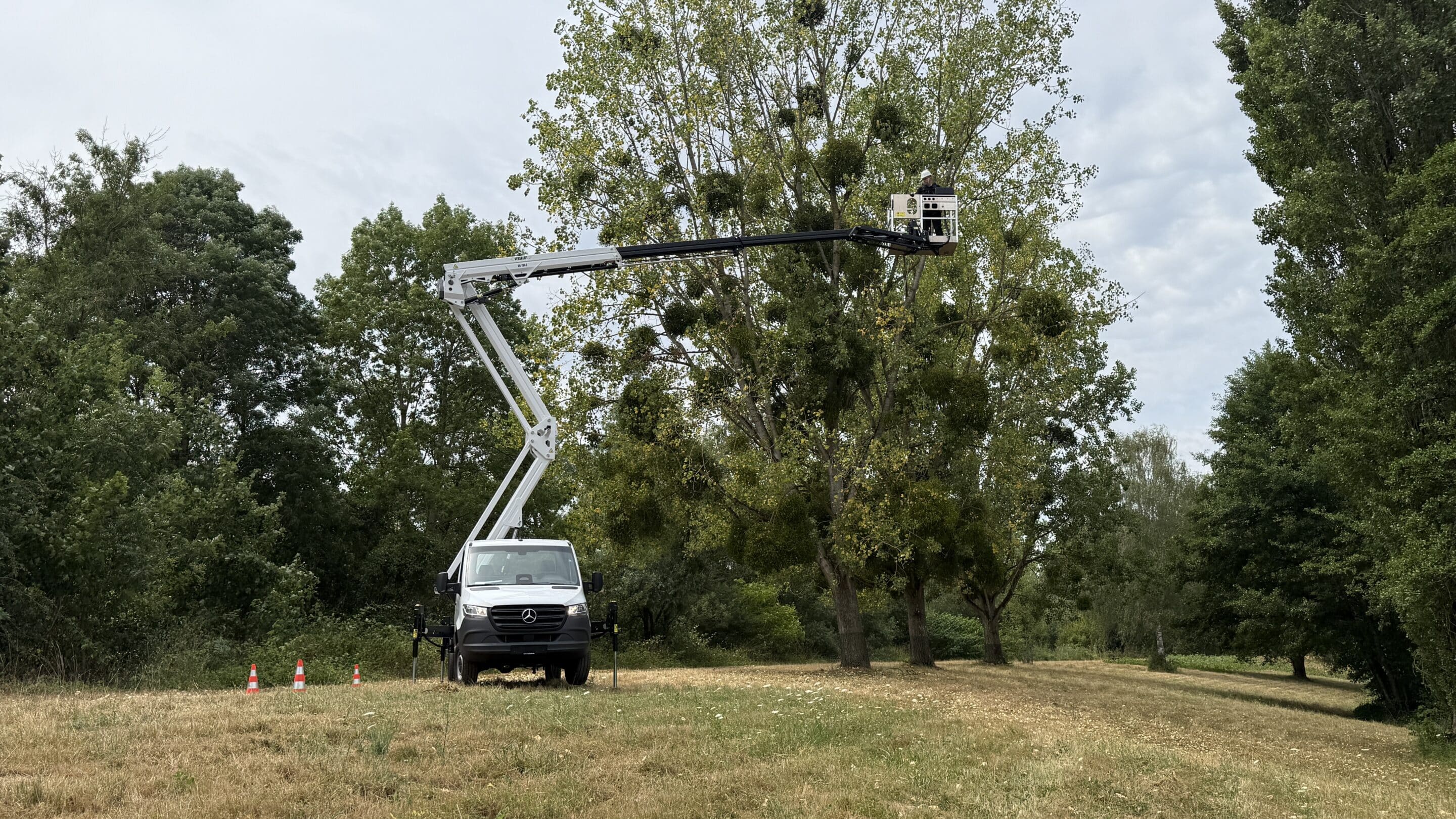
In these situations, outreach, boom configuration and positioning flexibility can be just as important as maximum working height.
Understanding the difference between these specifications is essential when choosing the right equipment. Our blog, Working Height vs Outreach: What Really Matters When Choosing an Access Platform?, explores why the highest-reaching platform isn’t always the most suitable for the job.
Why Are 3.5-Tonne Access Platforms Important for Urban Maintenance?
Vehicle size and weight can have a significant influence on how easily maintenance teams move between locations.
Larger vehicles may provide the necessary working height and outreach, but they can also introduce practical challenges when operating in restricted urban environments.
This is one reason why 3.5-tonne vehicle-mounted access platforms are becoming an increasingly attractive option for infrastructure maintenance.
Their advantages can include:
Greater manoeuvrability
A lighter vehicle category can provide practical benefits when navigating residential streets, urban roads and locations with limited access, although actual vehicle dimensions and turning requirements remain important.
Greater flexibility for drivers
In the UK, vehicles with a maximum authorised mass of up to 3.5 tonnes can generally be driven on a standard Category B driving licence, subject to the driver’s individual licence entitlement and vehicle configuration.
This can provide greater flexibility when allocating vehicles and operators across maintenance teams.
Reduced operational complexity
For organisations managing multiple vehicles, a 3.5-tonne fleet can offer advantages in driver allocation and day-to-day fleet planning.
Access to a wider range of working heights
Advances in access platform engineering mean businesses no longer need to automatically move into a heavier vehicle category to achieve greater working heights.
Are Access Platforms Becoming Smarter as Well as More Capable?
As urban maintenance becomes more demanding, the technology behind access platforms is also evolving.
For fleet managers, efficiency is not simply about how quickly an individual job can be completed. It also depends on equipment availability, operator familiarity and the ability to minimise unexpected downtime.
Modern access platforms increasingly incorporate technology designed to support these requirements.
The Versalift V-Range introduces a standardised approach to platform operation, with all seven models sharing the same XPC proportional control system, hydraulic architecture and electrical layout.
This consistency helps operators move between different models with familiar controls, while also simplifying servicing and maintenance for fleet managers.
The range also incorporates Real Time Connect (RTC), providing remote diagnostics and machine monitoring capabilities.
For organisations managing access platforms across multiple locations, these technologies can help improve equipment visibility, support maintenance planning and reduce operational complexity.
The result is an approach to access equipment that considers not just performance at height, but efficiency throughout the working day.
The Versalift V-Range: Designed for the Changing Demands of Working at Height

The new Versalift V-Range has been developed to address many of the challenges faced by modern infrastructure maintenance teams.
Combining seven vehicle-mounted access platforms within a standardised 3.5-tonne architecture, the range offers:
- 17 to 27 metres working height to suit different maintenance applications.
- Articulated and telescopic boom configurations for different access requirements.
- Automatic stabilisation to simplify platform setup.
- XPC proportional controls for smooth, precise and familiar operation.
- Real Time Connect technology to support remote diagnostics and fleet management.
- Standardised components and systems to simplify servicing and reduce fleet complexity.
From street lighting and telecommunications to utilities and local authority maintenance, the V-Range provides a flexible approach to working at height.
The Future of Urban Maintenance: Working Smarter, Not Just Higher
Looking for a vehicle-mounted access platform that can meet the changing demands of urban infrastructure maintenance?
Explore the Versalift V-Range to discover seven models designed around flexibility, efficiency and simplified operation or contact our team to discuss your requirements and find the right access platform for your business.
Frequently Asked Questions About Urban Maintenance Access Platforms
What type of access platform is best for urban maintenance?
The best access platform depends on the working height, outreach, available space and surrounding obstacles. Compact 3.5-tonne vehicle-mounted access platforms can be particularly suitable for urban maintenance, while articulated boom configurations provide additional flexibility when working around obstacles.
Why are articulated access platforms useful in urban environments?
Articulated access platforms allow operators to position the basket around obstacles such as buildings, trees and parked vehicles. This makes them useful for street lighting, telecommunications and infrastructure maintenance where direct access may be restricted.
Can a 3.5-tonne access platform be driven on a standard UK driving licence?
Generally, yes. A vehicle-mounted access platform with a maximum authorised mass of 3.5 tonnes can usually be driven with a Category B licence, subject to the driver’s entitlement and vehicle configuration. Separate training and competency requirements apply to operating the access platform itself.
What working heights are available in the Versalift V-Range?
The Versalift V-Range includes seven models offering working heights from 17 to 27 metres. The range includes telescopic, articulated and flyboom configurations designed for different working-at-height applications.
Follow us for our latest news, advice and products.



Our office
Versalift United Kingdom Limited
1 Altendiez Way, Latimer Park
Burton Latimer, Kettering
Northants, NN15 5YT
Terms & Conditions of Sale | Privacy Policy | Cookie Policy | Copyright © 2026 Versalift United Kingdom Limited